PACT is proud to be supporting the ABTC in moving the sector forwards with UKAS
Written by Jason Light
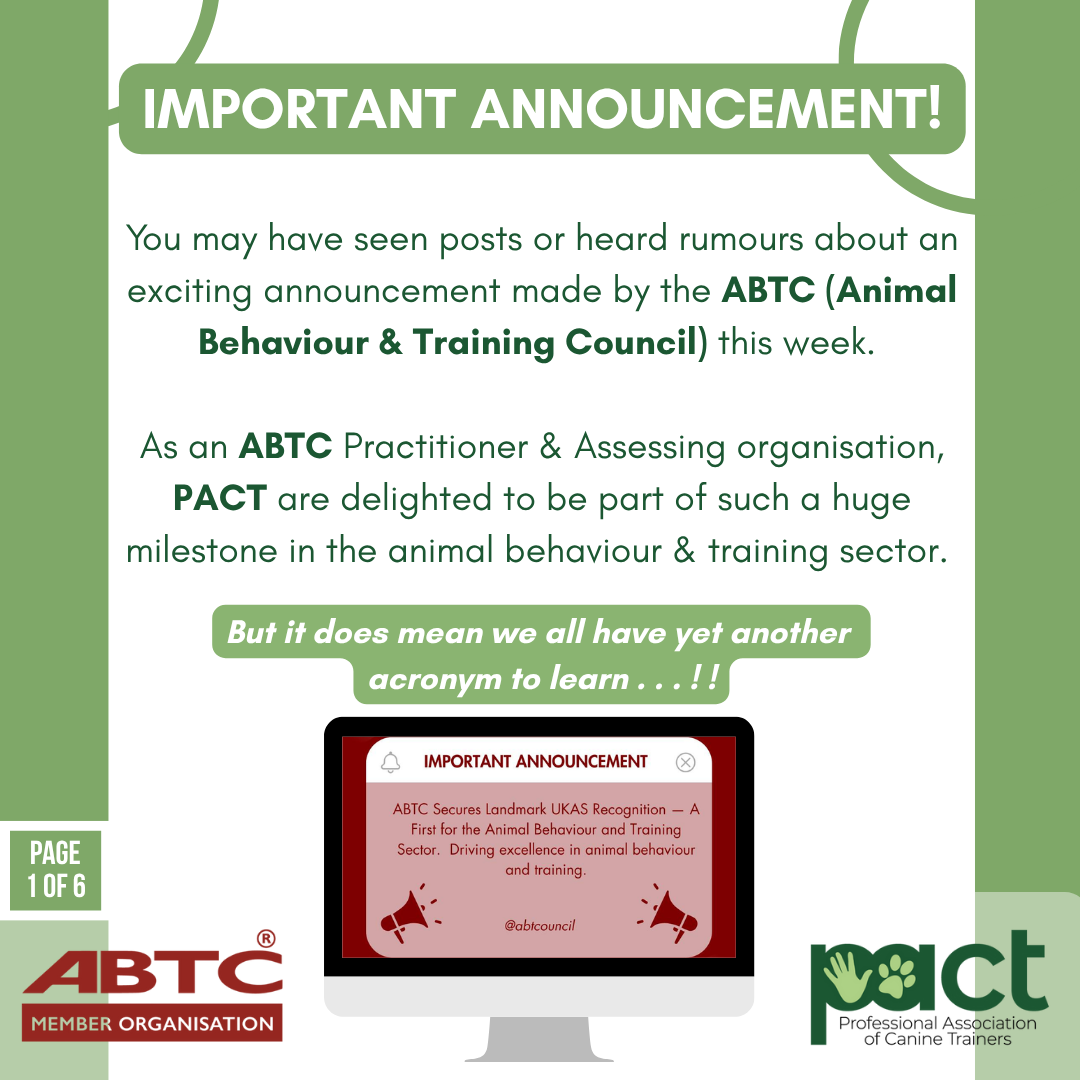
You may have seen posts or hear rumours about an exciting announcement made by the Animal Behaviour and Training Council(ABTC) this week (5th October 2025)!
This evening it was agreed at Full Council that the ABTC would move towards ISO 17065 accreditation… Not much of a big deal right… WRONG!!
As an ABTC Practitioner & Assessing organisation PACT are delighted to be actively supporting such a huge milestone in the sector.
This blog is (at least an attempt) to try and explain a bit more about what has been going on, what it could mean in future and why I think it’s all really exciting.
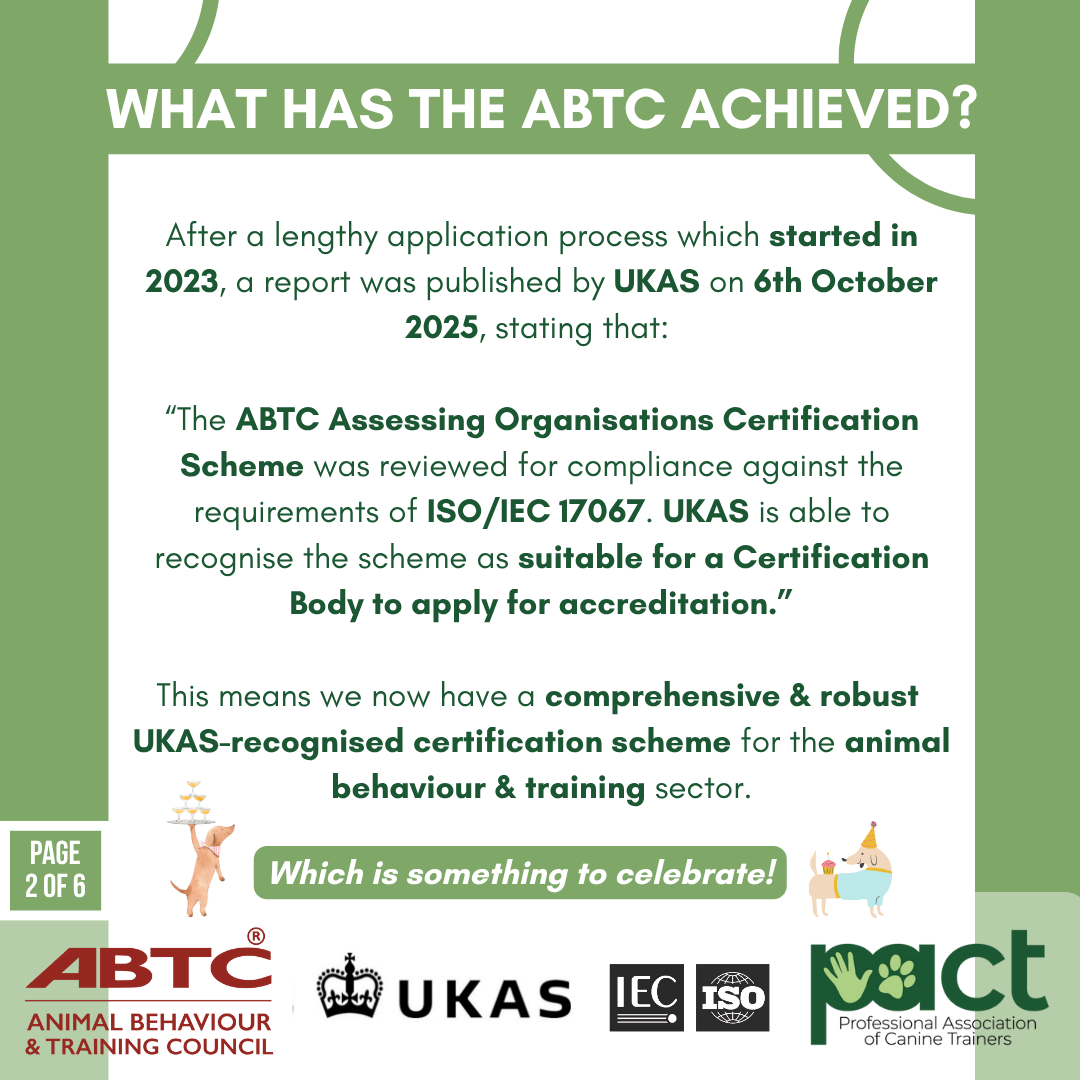
The recent recognition from UKAS that the current approach to standards and governance from ABTC meets ISO 17067 standard strengthens the organisations standing with key players, such as ministers government organisations such as Defra.
If you are wondering what this means in simple terms, the ABTC put it quite well:
”In simple terms, UKAS has formerly recognised the ABTC’s scheme for quality-assuring the organisations (such as PACT) that assess Animal Trainers and Behaviourists. It means that their framework meets the international standard for fairness and consistency and they can now apply for Certification Body Status.
For Assessing Organisations such as PACT it confirms that our processes meet recognised quality benchmarks. For practitioners such as our Full Members it strengthens the value and credibility of being ABTC registered.
For the public it means greater confidence that lost listed with the ABTC are part of a trusted, independently verified system focused on animal welfare and evidence based practice. “
Professional Certification vs Academic Qualifications
The steps being taken with UKAS relate to Professional Certification, so before I dive into some of the details, I just want to provide a bit of context.
Academic Qualifications & Professional Certification are both brilliant, but are also quite different. For the purposes of this blog I'll focus on two pertinent ones, longevity and ongoing accountability.
Longevity
Academic qualifications are (pretty much) yours for life once achieved. Professional Certifications by their nature are ongoing and need to be maintained.
Ongoing accountability
There are ethics around academic qualifications, but this tends to be pretty much a moment in time and there is little accountability On the other hand, the ongoing nature of Professional Certifications means they bring with them accountability and consequences.
The decision to move forwards was taken as a collective via a Full Council vote, PACT alongside fellow Practitioner Organisations such as APDT, APBC, TCBTS, FABC.
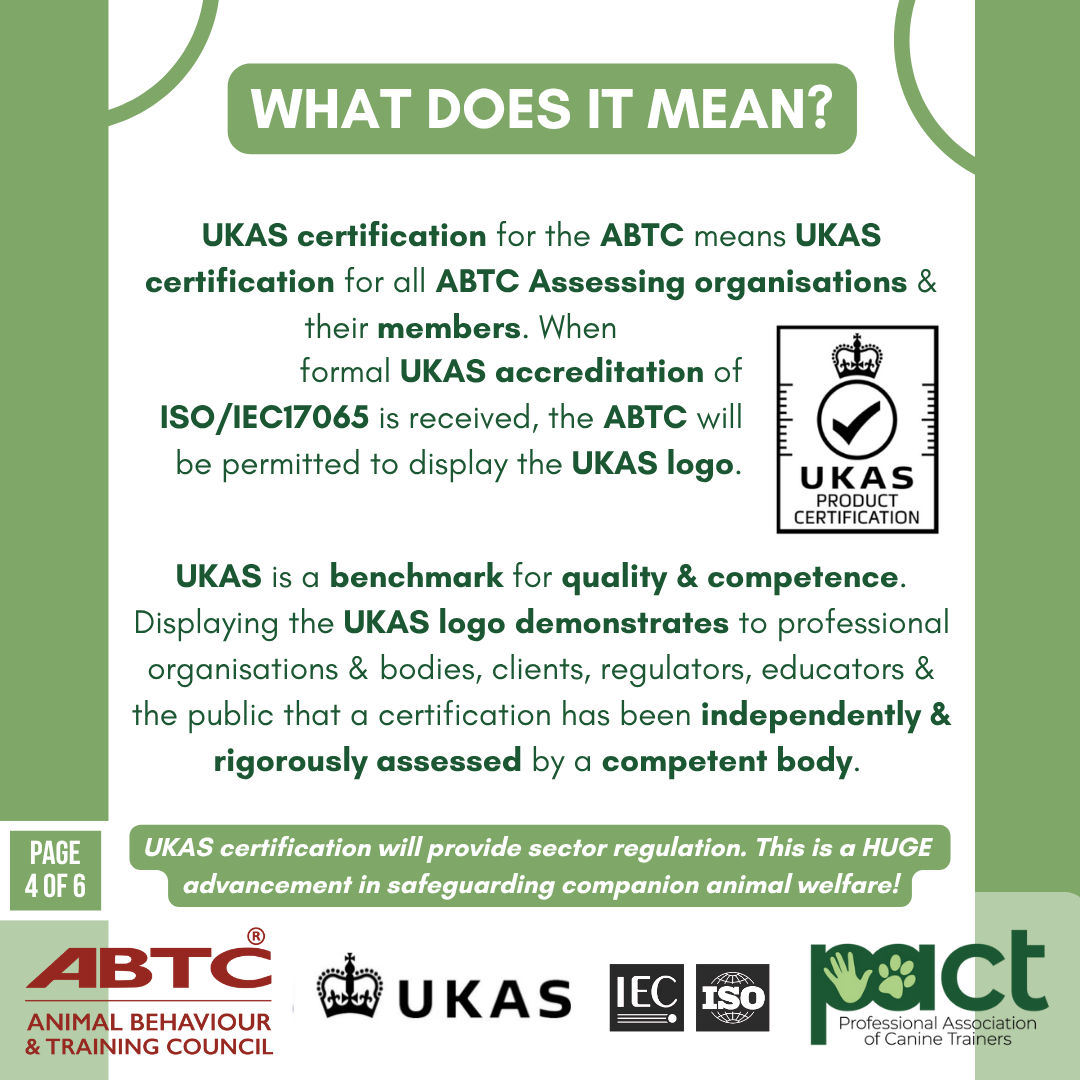
At this stage UKAS accreditation is in itself a form of additional voluntary regulation for the ABTC, but is being done with a purpose.
Next steps and into the future..
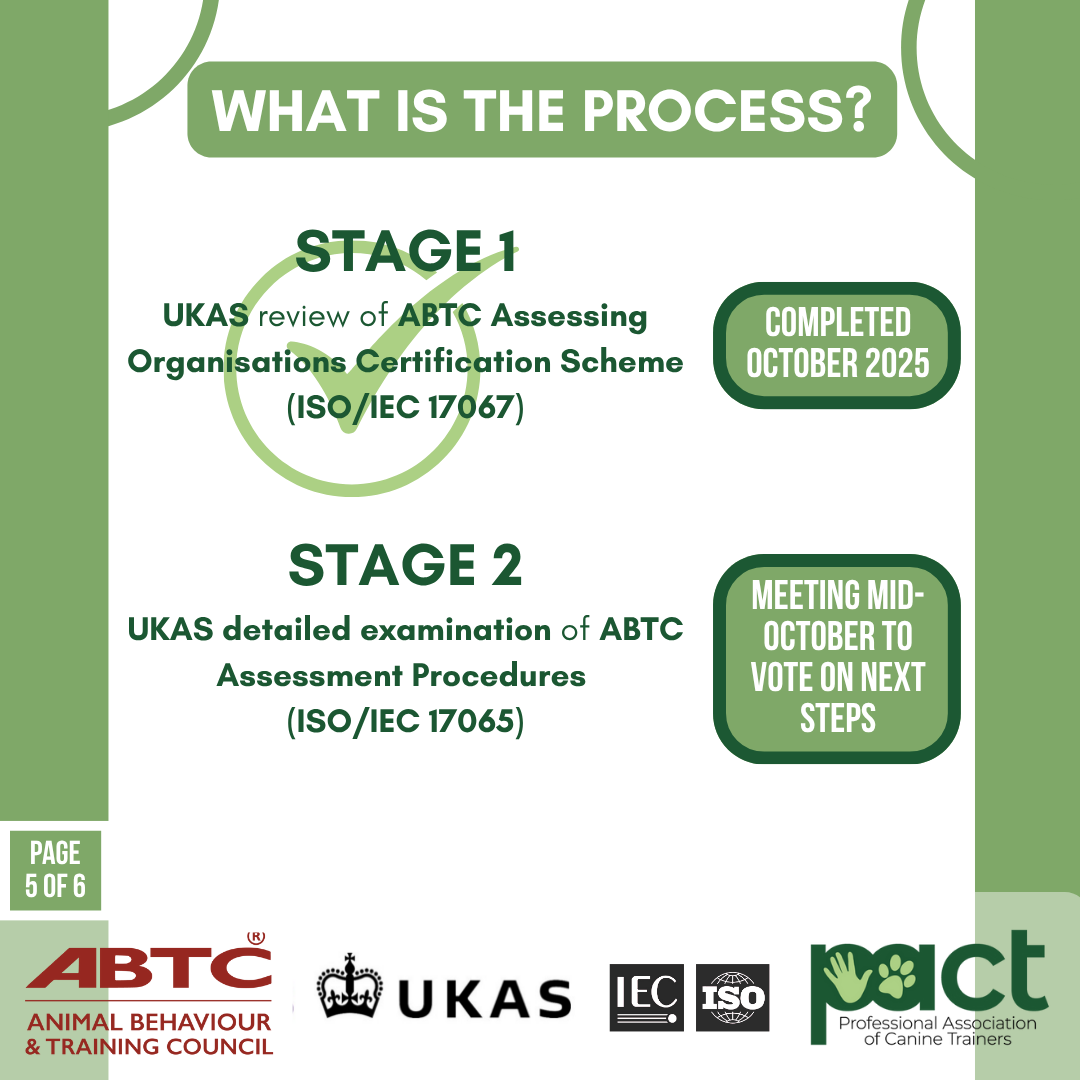
Having been assessed to meet the ISO 17067 standard, the ABTC are now taking steps towards becoming ISO 17065 certified..
Should the ABTC achieve the next step of ISO 17065 compliance, it would mean that the assessments carried out by ABTC Assessing Organisations such as PACT would be considered UKCAS compliant.